Unpacking Lehetsz Király Dalszöveg: A Bold Anthem of Freedom, Power, and Pleasure from Rómeó és Júlia
In the vibrant tapestry of the Hungarian musical Rómeó és Júlia, based on Shakespeare's timeless tragedy, certain songs stand out not just for their melodic brilliance but for their profound thematic depth. Among these, "Lehetsz Király Dalszöveg" (You Can Be King Lyrics) emerges as a powerful, defiant anthem that challenges conventional notions of authority, happiness, and love. It’s a song that speaks directly to the hearts of those yearning for liberation from societal chains, offering a compelling alternative to the often-illusory trappings of power and status. This article delves deep into the lyrics of "Lehetsz Király," exploring its rich symbolism, character perspectives, and enduring relevance, making it a must-read for fans and newcomers alike seeking to understand the core message of this pivotal piece.
The Illusion of the Crown: A Critique of Power
At its core, "Lehetsz Király Dalszöveg" serves as a scathing critique of traditional power structures, particularly the monarchy, which is often perceived as the pinnacle of human achievement. Mercutio, ever the cynical and insightful observer, kicks off the song with a stark warning: "Lehetsz király, hiába vagy / A mosolyod úgyis az arcodra fagy." (You can be king, but in vain / Your smile will anyway freeze on your face). This powerful imagery immediately punctures the glamorous facade of royalty, suggesting that despite outward appearances of success, kingship often leads to a life devoid of genuine joy and filled with performative happiness. It hints at the isolation and pretense inherent in holding absolute power.
Benvolio echoes this sentiment, lamenting the fate of "Szegény fiúk ott legfelül / Talpig aranyban, de tök egyedül." (Poor boys up there / Head to toe in gold, but totally alone). His lines paint a poignant picture of the lonely ruler, adorned in wealth but stripped of authentic connection. Power, in this view, is not a liberation but a "nyűg, csak ostoba lánc" (burden, just a stupid chain) that binds its wearer, contrasting sharply with the freedom enjoyed by those "down here" where the dance is always free. This segment masterfully exposes the paradox of power: what appears to offer ultimate freedom often leads to the most profound confinement. For a deeper dive into this theme, consider exploring Rómeó és Júlia's Lehetsz Király: A Critique of Power.
The Chorus's Call to Unfettered Pleasure and Living Authentically
In stark contrast to the hollow existence of rulers, the chorus of "Lehetsz Király Dalszöveg" champions an uninhibited embrace of life's immediate pleasures. It's a vibrant, almost hedonistic call to action: "Mámort hoz és kéjjel kínál minden száj és bájos szempár / Csók ha csattan, láb ha röppen, nadrág csusszan, ágyú dörren." (Ecstasy brings and pleasure offers every mouth and lovely pair of eyes / Kisses if they smack, feet if they flutter, trousers slip, cannon roars). These vivid, sensual lines celebrate the raw, unfiltered experience of human connection, passion, and physical joy. It’s a manifesto for living in the moment, for seizing every opportunity for delight without reservation.
The repeated refrain, "Élj, ahogy jól esik az sem baj, ha meg is lesik! / Tedd azt, ami élvezet, bizsergesd a tested-lelked!" (Live as you please, it doesn't matter if they spy on you! / Do what is pleasure, tingle your body-soul!), encapsulates the essence of this philosophy. It’s an urgent plea to prioritize personal enjoyment and self-fulfillment over societal expectations or judgments. This isn't just about fleeting gratification; it's about a holistic approach to life where one's body and soul are awakened and stimulated by authentic experiences. This perspective offers practical advice for modern life: don't let the fear of judgment dictate your pursuit of genuine happiness. Find what truly excites you and embrace it.
Mercutio's Cynicism: Rejecting Love and External Power
Mercutio's character in "Lehetsz Király Dalszöveg" goes beyond merely critiquing kings; he extends his skepticism to the very notion of romantic love, particularly highlighted in his rap segment. He dismisses rulers as "ostoba mind!" (all foolish!), living isolated from reality, ignorant of genuine emotion: "Fogalmuk sincs róla, mi a szerelem!" (They have no idea what love is!). This serves as a pivot to his more personal philosophy, where intense romantic love is viewed with suspicion.
His rap begins with a recognition of love's power: "A szerelem örvény-ez ősrégi törvény / Ha velem vagy, dobd be magad!" (Love is a whirlpool – this is an ancient law / If you're with me, throw yourself in!). However, he quickly pulls back, advising, "De a szerelmet hagyd! Az behúz a csőbe. / Hogy én egy nőbe? Az ki van csukva!" (But leave love! It pulls you into a trap. / Me into a woman? That's out of the question!). Mercutio fears the vulnerability and potential for emotional devastation that deep love brings, comparing it to an unstoppable natural disaster: "Egy ostoba érzés, egy orkán, egy szélvész, / Egy tájfun, egy ciklon, ha támad? Én nem vagyok itthon!" (A stupid feeling, a hurricane, a gale, / A typhoon, a cyclone, if it attacks? I'm not at home!).
Instead, Mercutio advocates for a detached pursuit of pleasure, maintaining his composure and stepping away when things get too intense: "De megőrzöm én a hidegvérem, / Ha forró a talaj, lelépek szépen." (But I'll keep my cool, / If the ground is hot, I'll step away nicely). His ideal is a transient, uncomplicated connection: "Ki mindig annak tenné a szépet, / Ki bejön, köszön, és már le is lépett." (Who would always do nice things for someone, / Who comes in, says hello, and then leaves). This segment powerfully reinforces Mercutio's Message: Rejecting Love & Royalty in Lehetsz Király, showcasing his unique blend of wit, hedonism, and emotional guardedness.
Defining True Sovereignty: Freedom from Conflict
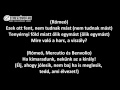
Romeo, often perceived as a romantic idealist, finds common ground with Mercutio and Benvolio in their disdain for the power struggles of the elite. He questions the endless cycle of conflict: "Ezek ott fent, nem tudnak mást / Tenyérnyi föld miatt ölik egymást / Mire való a harc, a viszály?" (Those up there, they know nothing else / They kill each other for a tiny piece of land / What's the point of fighting, of strife?). This highlights the absurdity of power-driven disputes, particularly in a play where two families are locked in a deadly feud over seemingly trivial matters.
The collective conclusion reached by Romeo, Mercutio, and Benvolio is profound: "Ha kimaradunk, nekünk az a király!" (If we stay out of it, that is king for us!). This line crystallizes the song's ultimate message: true kingship, true sovereignty, is not found in ruling others or accumulating wealth, but in the freedom from such burdens. It’s about opting out of destructive conflicts, choosing peace over power, and defining one's own terms of happiness. This perspective suggests that liberation comes not from seizing the throne, but from renouncing the desire for it altogether and finding joy in one's personal sphere of influence.
Conclusion: The Enduring Resonance of Lehetsz Király Dalszöveg
"Lehetsz Király Dalszöveg" is more than just a musical number; it's a philosophical statement that challenges its audience to reconsider their values. It powerfully articulates a worldview where genuine happiness, freedom, and pleasure are found not in the pursuit of power or societal approval, but in authentic self-expression and the rejection of illusory grandeur. From Mercutio's biting cynicism towards kingship and love to the chorus's exuberant celebration of life's immediate joys, and Romeo's plea for peace over conflict, the song paints a vivid picture of an alternative existence. Its themes of questioning authority, embracing personal freedom, and seeking authentic experiences remain profoundly relevant, encouraging listeners to define their own "kingship" outside the traditional confines of power and status. The raw energy and defiant spirit of "Lehetsz Király Dalszöveg" continue to resonate, inviting all to live freely, love passionately (or not, as Mercutio would advise!), and truly own their personal realm.